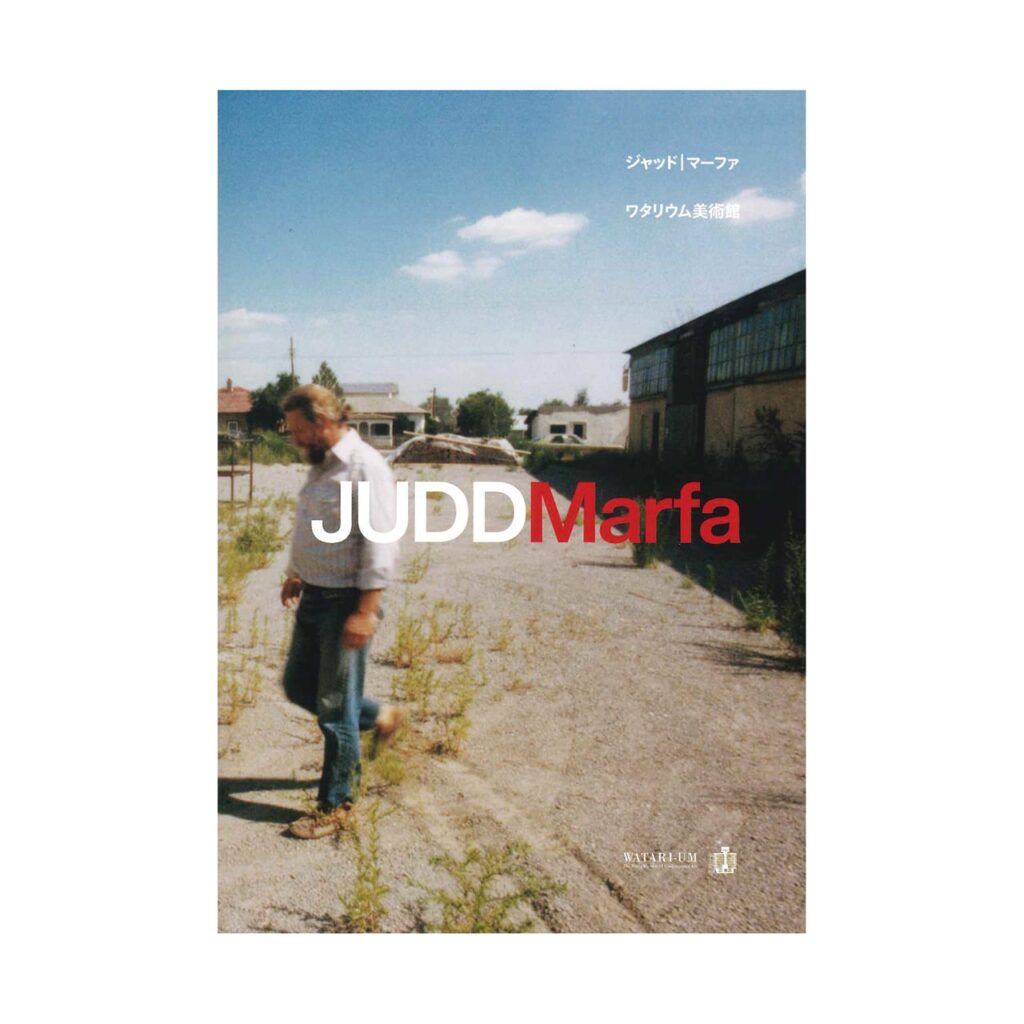
ワタリウム / 78ページ / ソフトカバー / A5版 / カラー / 日英併記
1. Introduction
1. はじめに
Donald Judd (1928‒1994), known as a leading artist of the twentieth century, began his career in New York after studying painting and philosophy. He was an active art critic from 1959 to 1965 and initially gained recognition through his writing, including exhibition reviews and critical essays, while simultaneously working as an artist.
20世紀を代表するアーティストとして知られるドナルド・ジャッド(1928-1994)は、美術と哲学を学んだあと、ニューヨークを拠点に自らのキャリアを始めます。1959年から65年にかけて批評家として活動をした彼は、はじめは展覧会のレビューや評論活動といった執筆行為で注目を浴びながら、並行して美術作品を発表していきました。
Leaving New York in the 1970s and moving to Marfa, Texas, near Mexico, he repurposed buildings for living and working, and established the Chinati Foundation for the permanent installation of art. Each of the spaces Judd pursued in this way has now, after half a century, remained as Judd intended in Marfa.
1970年代にニューヨークを離れ、メキシコにほど近いテキサス州の町マーファに移り住んだジャッドは、町に残る建物を生活の場、制作の場として作り変え、さらに作品の恒久的な展示スペースを作るためチナティ財団を設立しました。こうしてジャッドが追求し続けた一つ一つの空間は、半世紀の時を経た今も、ジャッドが意図したままの姿でマーファにあり続けています。
In addition to a selection of Judd’s early paintings from the 1950s and the three-dimensional works from the 1960s through the 1990s, this exhibition introduces his spaces in Marfa through drawings, plans, videos, and materials. The works and materials presented in this exhibition allow visitors to discover Judd’s strong conviction about the integrity of visual art and its installation, of which he wrote “cannot be reduced to performance.” The exhibition also features a section documenting the 1978 exhibition, The Sculpture of Donald Judd (February 22–March 22, 1978), organized by WATARI-UM founder Shizuko Watari. And texts here throughout the museum explore the scope of Judd’s work through key concepts.
本展は1950年代に制作された初期の絵画作品、1960~90年代の立体作品に加え、ジャッドがマーファに残した空間について、ドローイング、図面、映像、資料を通して紹介します。これらの作品や資料を通して、展示を「その場限りのパフォーマンスにしてはならない」という、アートと展示がもつ完全性に対するジャッドの強い信念をご覧いただきたいと思います。また、ワタリウム美術館の創設者、和多利志津子が1978年にジャッドを日本に招聘し開催した「ジャッド展」(1978年2月22日~3月22日)のドキュメントのコーナー展示も設けられています。そして、会場内のテキストでは広範にわたるジャッドの活動の軌跡をキーワード毎に紹介していきます。
2. Three-dimensional objects
2. 3次元のオブジェクト
Judd’s 1964 text “Specific Objects” is an important critical essay describing the trends in American art at the time.
ジャッドによる1964年のテキスト「スペシフィック・オブジェクト(明確な物体 / 特異物)」は、当時のアメリカ美術の傾向を記述した重要な評論文です。
Three dimensions are real space. That gets rid of the problem of illusionism and of literal space, space in and around marks and colors – which is riddance of one of the salient and most objectionable relics of European art. The several limits of painting are no longer present. A work can be as powerful as it can be thought to be. Actual space is intrinsically more powerful and specific than paint on a flat surface.*1
3次元は現実空間である。それは[2次元平面に描かれた絵画において、3次元的な奥行きをもった空間を認識してしまうような]イリュージョニズムの問題、それから絵具の軌跡や色彩の内や周辺にあるリテラル(即物的)な空間の問題を取り除き、ヨーロッパ美術のなかでもっとも顕著で不快な遺物の追放するのだ。絵画の限界の幾つかはもはや存在しない。作品は考えられるかぎり強力でありうる。実際の空間は平坦な表面上にある絵具よりも、本来的に力強く、かつ明確である。
Noting that this text is not an explanation of Judd’s own work, here we see his idea that the object itself would appear in space, without generating illusion or theatricality.
このテキストがジャッド自身の作品の解説ではないことに留意しながらも、ジャッドが3次元の立体作品に期待していたのは、イリュージョンや演劇性が発生しない、物そのものが空間のなかにあらわれるという点にありました。
Many of his early works were characterized by a rough finish, as he created them by his own hand or with the help of his father (who was skilled in woodworking). However, Judd explains this was solely for financial reasons. To eliminate the handcrafted aspect of his own work, he began working with fabricators in 1964.
初期の立体作品の多くは、自らの手で、あるいは(木工が得意だった)父の力を借りて制作をしていたので、ラフな仕上がりが特徴的でした。しかし、それはあくまで金銭的な理由からだとジャッドは説明します。自作の手仕事的な側面を抑制するために、64年から加工業者との協働制作にも着手していきます。
*1 Donald Judd, “Specific Objects”, 1964.
・Untitled, 1967, Galvanized iron
Collection: Ohara Museum of Art, Ohara Art Foundation, Kurashiki
・Untitled, 1990, Black anodized aluminum with bronze plexiglass (10units)
Collection: Shizuoka Prefectural Museum of Art
3. New York
3. ニューヨーク
After several solo exhibitions at galleries and group shows at museums, the Whitney Museum presented a retrospective in 1968. That same year, he purchased the five-story cast-iron building at 101 Spring Street (in the current SoHo district), establishing it as both his residence and studio.
ギャラリーでの個展や美術館でのグループ展の参加を経て、68年にホイットニー美術館で回顧展を開催したジャッドは、同年に現・ソーホー地区にある地上5階建ての鋳鉄造のビル《スプリング通り101番地》を購入、居住兼制作の場とします。
My requirements were that the building be useful for living and working and more importantly, more definitely, be a space in which to install work of mine and of others. At first I thought the building large but now I think it small; it didn’t hold much work after all. I spent a great deal of time placing the art and a great deal designing the renovation in accordance. Everything from the first was intended to be thoroughly considered and to be permanent, as, despite several, it still is.*1
私の希望としては、まずこの建物が生活と仕事に実用的であること、そしてそれよりも重要で絶対的な条件として、私や他の作家の作品を設置するための空間となることだった。初めはこの建物は大きいと思っていたが、どうやら小さかったようで、それほど多くの作品を設置することはできなかった。 作品の配置と、それに応じて改修を設計することにとても多くの時間を費やした。はじめからすべては徹底的に配慮され、恒久であるように意図され、幾つかを除けば、今でもそうである。
Artists were the first to notice this SoHo area, originally small-scale industrial and commercial districts. As the area’s industries gradually declined, they began establishing studio-apartments here, and many galleries also took root. However, New York City also had plans for urban renewal, called Lower Manhattan Expressway, in this district. Against the city’s redevelopment plans, Judd joined the civic movement alongside his then-wife, Julie Finch. This involvement led him to have an interest in a community-based political organization. However, he eventually came to disagree with the operations and discourse of the artist-led civic interest groups organized in New York City at that time, including the Art Workers’ Coalition and the Soho Artists Association.
元々は小規模な工業・商業があつまるエリアであったこの地区に最初に目をつけたのはアーティストたちで、徐々に産業が衰退していくこのエリアにアトリエ兼住居を構え始めました。しかしニューヨーク市もまた、この地区の都市再生を目論んでおり、 再開発の計画に対して、ジャッドは当時の妻のジュリー・フィンチとともに反対運動に参加、その延長で地域を基盤とする政治組織の計画などもおこなっていました。しかし最終的には当時ニューヨークで組織されていたアーティスト主導の利益団体の活動の方針や言説に反対するようになります。
An excellent artist has to know the work of older excellent artists as the person’s own work is being formed. It’s a case of knowledge. There’s a lot of art and a lot of artists in New York. But not all of either and most of the artists have come somewhere else. Also most well-known artists leave New York after a while since the place is so disagreeable. There’s nothing mysterious about New York. It’s just that knowledge and a lot of business are there.*2
ニューヨークには多くの芸術や芸術家が存在する。しかしその全てがニューヨーク生まれということではないし、ほとんどの芸術家は他の場所から移り住んできた。また、最も有名な芸術家たちの多くもこの場所があまりにも居心地が悪いゆえ、しばらくするとニューヨークを去る。ニューヨークに神秘的なものは何もない。ただ知識と多くのビジネスがそこにあるだけだ。
He believed artists could and should participate politically as citizens. But he was critical of the role of art and artists in enacting change through art alone. Judd, who believed art existed as something in itself, began distancing himself from local civic activities in Soho, where art might be used or made to serve political and cultural purposes.
彼はアーティストも市民として、政治活動に参加すべきだし、それが可能だと信じていました。しかし、アーティストがアートを通じて社会に変化をもたらすことには懐疑的だったのです。アートがそれ自体として存在していると考えていたジャッドは、アートが政治的・文化的に利用されかねないソーホーでのローカルな市民活動から距離をとるようになりました。
Art is a peripheral activity, almost outside of the society of the United States. I felt that I had to leave that society to be an artist.*3
アートとは周縁的で、ほとんどアメリカという社会の外側での活動である。アーティストでいるためには、この社会から離れないといけないと思ったのだった。
He resolved to leave the city in search of a more comfortable place to be as an artist. Yet the practice he continued in a simpler place like Marfa began at 101 Spring Street, where he repurposed architecture for the permanent installation of art.
彼はアーティストとしてより居心地の良い場所を求めて、都市を離れる決意をします。しかし、そうして見つけたマーファのような簡潔な場所での実践も《スプリング通り101番地》でのリノベーションや作品の配置と地続きのものであったのです。
*1 Donald Judd, “Spring St 101”, 1989.
*2 Donald Judd, “Imperialism, Nationalism and Regionalism”, 1975.
*3 Ibid.
・Welfare Island, 1956, Oil on canvas
Collection: Judd Foundation
・101 Spring Street, New York, circa 1970
Photo Paul Katz, courtesy Judd Foundation
4. From paintings to objects
4. 2次元平面から3次元立体へ
Two things were going on in the painting: some of the earlier ones were organic and had curved lines; secondly, they were illusionistic to some extent, and I very steadily got tired of both things and tried to get rid of spatial illusionism, but I couldn’t get rid of it.*1
2つのことが[自分の]絵画ではおこっていた。第一に、初期の絵画のいくつかは有機的で曲線を含んでいたということ。第二にそれらはいくらかのイリュージョニズムを帯びていたこと。わたしは全くもってこの2つにあきあきしてしまい、この空間的イリュージョニズムを取り除こうと試みたが、それはできなかった。
Judd had grown weary of organic curves in two-dimensional paintings. Even when attempting abstraction to eliminate the inevitable illusionism that arises from imitating real space, he could not get rid of it. In a sense, his turn toward three-dimensional objects was inevitable. Yet the path he took was profoundly accidental.
2次元平面上の絵画において、有機的な曲線に飽きてしまったこと、それから現実空間を模倣するときにどうしても生じてしまうイリュージョニズムの問題を消し去ろうと抽象化を試みてもなお、取り除くことができなかったジャッドが3次元立体作品へと向かうのはある意味で必然性がありました。しかし、その道程は極めて偶発的なものだったのです。
[O]ne of the first three-dimensional ones started off as a piece of canvas from a failed painting that I tried to turn up, but I couldn’t make the canvas turn up evenly. *2
はじめの3次元作品のひとつは、失敗した絵画のキャンバス地を利用して、それを折り返そうとしたが、うまく平坦に折り返せなかったところから始まった。
The failed canvas became the turning point in Judd’s work, which evolved from low relief to high relief and finally to freestanding pieces. The early landscapes and abstract paintings exhibited here represent Judd’s work prior to the accident. During his early New York period, he gradually shifted his approach from landscape painting to abstraction, struggling against illusionism.
うまく折り返せなかったキャンバスは、浅めのレリーフから、奥行きのあるレリーフを経由して、自立する作品へと至ったジャッドの作品の契機であり、今回展示する初期の風景画・抽象画は、そのアクシデントの前のジャッドの試みです。風景画から抽象画へ、アプローチを少しずつ変えながら、イリュージョニズムと闘っていたのが、ニューヨーク時代のジャッドだったのです。
*1 “Don Judd: An Interview with John Coplans,” from the exhibition catalogue Don Judd, 1971.
*2 Ibid.
・Untitled, 1956, Oil on canvas*
・Untitled, 1958, Oil on canvas*
・Untitled, 1955, Oil on canvas*
*Collection: Judd Foundation
5. Red as a color that defines objects
5. 明快な色彩としての赤
I like the color and I like the quality of cadmium red light. And then, also, I thought for a color it had the right value for a three-dimensional object. If you paint something black or any dark color, you can’t tell what its edges are like. If you paint it white, it seems small and purist. And the red, other than a gray of that value, seems to be the only color that really makes an object sharp and defines its contours and angles.*1
私は赤という色が好きで、カドミウム・レッドがはらむ特質が気に入っている。それにこの色は3次元のオブジェクトにとって適切な明るさを持つ色だとも思う。黒や濃い色で塗装すると、ものの輪郭がわかりにくくなる。白で塗装すると小さく純粋主義的になる。赤こそが、同程度の明度をもつ灰色を除けば、対象を明確に見せ、輪郭や角度を明瞭に限定する唯一の色であるように思えるのだ。
For Judd, who sought to reveal the object itself within space, color was a subject of interest, yet its treatment seemed to trouble him. In his early works, Judd frequently employed red. He disliked how black blurred contours and how white appeared purist, so he used red as a color that clearly defined form.
物そのものを空間のなかにあらわしたいジャッドにとって、色彩は興味の対象でありながら、その扱いには頭を悩ませていたようです。初期の作品において、ジャッドは赤を多用します。黒では輪郭が曖昧になり、白だと純粋主義的に見えてしまうことが気に入らない彼は、形態を明確に限定する色として赤を使用しました。
Years later, he said that his shift to creating multicolored works using painted aluminum became possible because Swiss baked enamel based on the RAL color system offered more clear colors than American paint. Judd, who had learned to treat color as a material, stated that when combining multiple colors, he did not seek harmonious paintings nor deliberately create inharmonious combinations. In order to move away from the idea of order and structure found in representational painting of the European tradition, he simply wanted all colors to be present at once.
後年、アルミニウムを用いてマルチカラーの作品を制作するようになったのは、ドイツのRALカラーチャートに基づいたスイスの焼付塗装が、アメリカの塗装よりも明快な色彩を持っていたために可能になったのだと言います。色彩を物質のように扱えるようになったジャッドは、多色を組み合わせるとき、単に調和的な組み合わせを試みるのではなく、あるいは不調和的な組み合わせを試みるのではなく、ヨーロッパの絵画的伝統から距離をおくためにもただただ全ての色を同時に存在させたかったのだと述べています。
*1 “Don Judd: An Interview with John Coplans,” from the exhibition catalogue Don Judd, 1971.
・Untitled, 1960, Oil on canvas
Collection: Judd Foundation
・Untitled, 1989, Painted aluminum
Collection: Kirishima Open-Air Museum
6. Materials
6. 素材について
I’m very interested in the material that my work is made of, and showing that material, but because any kind of material is mostly gray, that eliminates color. So there’s always been this problem of how to make color and how to deal with it as a thing in itself, just as the material is. A lot of times I’ve used plexiglass, which, clearly, it’s plexiglass and it’s colored. I used to use paint, but it tended to be another surface that you put on metal, which to some extent falsifies the metal.*1
私は作品で使用される素材そのものに興味があり、その素材を表現することに興味がある。しかし、[自作で使用する]どんな素材もほとんど灰色なので、色は排除されてしまう。だから、素材そのものと同じように、色をどう作り出し、色自体をどう扱うかという問題と常に向き合ってきた。多くの場合、私はアクリル板を使用する。というのも、この素材は明らかにアクリル板であり、かつ色がついているからだ 。以前は塗料も使用していたが、それは金属の上に施す別の表面となってしまい、ある程度金属の本質を偽る傾向があった。
For Judd, paint was a concern because it tended to obscure the essence of materials. Plexiglass was a convenient material in that it allowed him to use the material as it was—without paint—while also possessing clear color. That said, it wasn’t that he preferred artificial materials; he wanted to use wood as a substance possessing its own unique materiality and color.
色彩の話とも関わりますが、ジャッドにとって、塗装とは素材の本質を偽る傾向があるとして気をかける対象でした。そして素材をそのまま、無垢材として使用しながら、明快な色彩も有しているという意味において、アクリル板(プレキシグラス)は好都合の素材であったのです。かといって、人工的な素材を好んでいた、というわけでもなく、木材は木材特有の素材・色彩をもつ物質として使用したかったわけです。
I think that plywood is like galvanised iron, which I have always used; it’s a plain material, it’s an ordinary commercial material. I link it to the galvanised iron, and also, I don’t especially distinguish between the pieces that have lots of color and those that don’t have very much color. To me, the galvanised iron is colored, the plywood is colored.*2
合板は亜鉛メッキ鉄板のようなものだと思う。私はずっと亜鉛メッキ鉄板を使ってきたが、それはごく普通の素材であり、ありふれた商業用材料だ。私にとって合板は亜鉛メッキ鉄板のようなものだし、色がたくさんあるものとほとんど色がないものを特に区別もしない。私にとって、亜鉛メッキ鉄板は色づいているし、合板も色づいているのだ。
However, upon closer reflection, considering that during the period when Judd transitioned from two-dimensional to three-dimensional work, he experimented with thick impasto by mixing sand into oil paint for his relief-like pieces, it becomes clear that paint itself was also a material, a substance. Viewed this way, it seems plausible that paint as a material was supported by the canvas as a support in his two-dimensional work, while the material itself came to stand independently, serving as its own support without a frame or pedestal in his three-dimensional work. And this evolution was also a means to circumvent the concept of composition, the referential aspect of visual art that he was also moving away from.
しかしよくよく考えてみると、かつてジャッドが平面から立体へと移行していた時期、レリーフ状の作品では油彩に砂を混ぜ、厚塗りを試みていたことを考えると、塗料もまた物質であり、素材であったことも分かります。そのように考えてみると、平面作品では素材としての塗料がキャンバスという支持体に支えられて成立していたものが、立体作品では素材そのものが、額縁や台座なしに、支持体も兼ねて自立するようになったということもできそうです。そしてその変遷もまた、視覚芸術におけるコンポジションという概念を避けるための手立てだったのです。
*1 “Donald Judd”, Interview with Michael Archer, March 1986.
*2 Interview with Friedrich Teja Bach, May 5, 1975.
・Untitled, March 18, 1984, Color samples from RAL chart and pencil on paper (surrogate)*
・Untitled, March 18, 1984, Color samples from RAL chart and pencil on paper (surrogate)*
・Untitled, July 24, 1986, Color samples from RAL chart and pencil on paper (surrogate)*
・Untitled, 1991, Clear anodized aluminum with transparent amber over yellow plexiglass*
* Collection: Judd Foundation
7. A good chair is a good chair
7. 良い椅子とは良い椅子なのだ
[T]he difference between art and architecture is fundamental. Furniture and architecture can only be approached as such. Art cannot be imposed upon them.*1
アートと建築の違いは根本的なものである。家具と建築はそれ自体としてのみ捉えられる。アートをそれらに押し付けることはできない。
Judd creating functional furniture might seem to contradict his attitude of focusing on the object itself. In fact, he once made a coffee table referencing his own work, which has a rectangular volume with a recessed top, and admitted it was a failure.
ジャッドが機能をもつ家具をつくるということは、物そのものを志向していた彼の態度と相反すると思われるかもしれません。実際、ジャッドはかつて自身の作品を参照して上面が窪んだ直方体のコーヒーテーブルを制作したことがあり、それを失敗だったと認めています。
Nevertheless, he continued making furniture because, after moving to Marfa, he couldn’t find suitable pieces to buy and had to make them himself. Architecture, too, was another activity he pursued while consciously distinguishing it from his artworks in terms of its functional nature.
それでも彼が家具をつくり続けた理由は、マーファに移り住んでから、買うべき家具が手に入らず、自分で作らなければならなかったからだと言います。そして彼にとって建築もまた、機能的であるという点において、アート作品とは異なることを意識しながら取り組んだもう一つの活動でした。
I can now make a chair or building that is mine without trying to derive forms from my own works of art.*2
今や私は、自らの芸術作品から形態を導くことなく、自分自身の椅子や建築をつくりだせる。
*1 Donald Judd, “It’s hard to find a good lamp”, 1993.
*2 Ibid.
・Front Shelf Chair 84-6, Designed 1978, Originally made in pine
Collection: Shinichiro Nakahara
・Drawing for chairs, January 1983, Pencil on paper (surrogate)
Collection: Judd Foundation
8. Permanent installation
8. パーマネントインスタレーション
There is no neutral space, since space is made, indifferently or intentionally, and since meaning is made, ignorantly or knowledgeably. This is the beginning of my concern for the surroundings of my work.*1
意図していようがしていまいが空間というのは生じるものであり、意識していようがしていまいが空間の意味というのは生じるものなので、ニュートラルな空間など存在しないのだ。これが私の作品の周囲に関する関心の始まりだ。
Now, having turned away from representational painting and moved from two-dimensional to three-dimensional work, Judd began to place greater importance on the surrounding space in which his pieces were placed. As his contemporaries also avoided the homogenous environments of museums and galleries, turning instead to site-specific endeavors or advocating anti-form and avoiding the creation of objects’ independent shapes themselves, Judd arrived at the concept of the permanent installation.
さて、イリュージョニズムをしりぞけ、平面から立体に移行したジャッドにとって、作品が置かれる周囲の空間というものが重要になっていきます。同時代のアーティストたちもまた、美術館やギャラリーという中性的な環境を避け、サイトスペシフィックな試みをしたり、アンチ・フォームを唱え、オブジェクトの独立したかたち自体をうみだすことを避けるようになっていくなか、ジャッドは作品を恒久的に展示するという概念に到達します。
The installation of my work and of others’ is contemporary with its creation. The work is not disembodied spatially, socially, temporally, as in most museums. The space surrounding my work is crucial to it: as much thought has gone into the installation as into a piece itself. The installations in New York and Marfa are a standard for the installation of my work elsewhere. My work and that of others is often exhibited badly and always for short periods. Somewhere there has to be a place where the installation is well done and permanent. This obviously implies that museums are inadequate for their job. My installations and architecture are very much in defense of my work. Visual, spatial art cannot be reduced to performance.*2
私や他のアーティストの作品の制作は、配置と同時に行われる。多くの美術館にあるような、空間的、社会的、時間的に[制作場所から]切り離されたものではない。周りを取り囲む空間も私の作品にとって不可欠であり、作品そのものと同じくらいその配置についても検討を重ねている。ニューヨークとマーファでのインスタレーションは、他の場所での作品の配置方法の規範となっている。私や他のアーティストの作品はしばしば不適切な形で展示されてしまい、展示期間もきまって短い。適切かつ恒久的に配置できる場がどこかになくてはならないだろう。ということはつまり、美術館がその役割を果たせていないということである。私はインスタレーションと建築を、自分の作品を守るために行っている。視覚芸術、空間芸術をその場限りのパフォーマンスにしてはならないのである。
Permanent installation was both an act of rebellion against established institutions like museums and galleries. It was also an expression of his discomfort with the commercial “cash-and-carry” attitude toward art in New York. Most importantly, it was crucial to his idea of living and working and to the development of his art. Following his practice at 101 Spring Street, this approach would bear fruit in Marfa.
パーマネントインスタレーション(恒久展示)は、美術館やギャラリーといった既成の制度への反抗の姿勢でもあり、ニューヨークでの都市開発や商業主義に感じた違和感のあらわれであり、そして何よりも自身の生活と制作のための手段でもありました。《スプリング通り101番地》での実践を経て、マーファでその成果が結実していくことになります。
*1 Donald Judd, “21 February 1993”
*2 Donald Judd, “Judd Foundation”, 1977.
・Untitled, 1977, Stainless steel and blue plexiglass*
・Drawing for a sculpture, 1977, Pencil on paper*
・Drawing for a sculpture, 1977, Pencil on paper*
・Drawing for a sculpture, 1977, Pencil on paper*
* Collection: WATARI-UM, The Watari Museum of Contemporary Art
9. Exhibition in Galerie Watari
9. ギャルリー・ワタリ「ジャッド展」
Donald Judd’s first solo exhibition in Japan was held here in 1978 at Galerie Watari (The Sculpture of Donald Judd, Galerie Watari, Tokyo, Japan, February 22–March 22, 1978 ), the predecessor to WATARI-UM, The Watari Museum of Contemporary Art. Three objects were displayed in the gallery space located near the current WATARI-UM’s external stairwell, while five drawings and two prints were exhibited in the back room.
ジャッドの日本初の個展は1978年にここ、ワタリウムの前身であるギャルリーワタリで開催されています。現在のワタリウムの外部階段室あたりに位置した画廊空間に立体作品が3点と、奥の部屋に5点のドローイングと2点の版画作品が展示されました。
This corner recreates the original Galerie Watari exhibition using models alongside archival materials, inviting visitors to witness the passage of approximately 50 years.
このコーナーでは当時の手紙のやりとりや来日時の資料、それから当時も展示されていた作品とともに模型でギャルリーワタリの展示を再現し、50年ほどの時間の経過を確認いただければと思います。
[wall, from top left]
・Donald Judd, 1977 Donald Judd Art © 2026 Judd Foundation/ARS, NY/JASPAR, Tokyo*
・Donald Judd and Shizuko Watari, 1977*
・Donald Judd and Shizuko Watari at the opening of The Sculpture of Donald Judd at Galerie Watari, 1978*
・Toshiaki Minemura, Yayoi Kusama and Yoichi Kimura, at the opening of The Sculpture of Donald Judd at Galerie Watari, 1978*
・Lauretta Vinciarelli, Yayoi Kusama and Donald Judd at the opening of The Sculpture of Donald Judd at Galerie Watari, 1978*
・Letter from Shizuko Watari to Donald Judd, July 27, 1976*
・Letter from Shizuko Watari to Donald Judd, November 25, 1976*
・Drawing for Galerie Watari exhibition layout, February 7, 1977*
・Installation instructions for works by Donald Judd, circa 1977*
[opposite wall]
・Untitled, 1977, Etching on paper**
・Untitled, 1977, Etching on paper**
[table]
・Model of The Sculpture of Donald Judd at Galerie Watari, 1978 (Scale 1:20), 2026, Paper, made by w/ (Hirotaka Sugisaki)
・Catalogue of The Sculpture of Donald Judd at Galerie Watari, 1978, Designed by Mitsuo Katsui**
・Invitation of The Sculpture of Donald Judd at Galerie Watari, 1978**
* Courtesy Judd Foundation
** Collection: WATARI-UM, The Watari Museum of Contemporary Art
10. Marfa
10. マーファ
This place is primarily for the installation of art, necessarily for whatever architecture of my own that can be included in an existing situation, for work, and altogether for my idea of living.*1
この場所は主にアートの設置のためであり、既存の状況に組み込むことができる私自身の建築のためであり、仕事のためであり、そして全体として私の生きるための考えのためである。
In the early 1970s, Judd traveled through the American Southwest and Mexico in search of a place to live and install his work, finally discovering Marfa. It was the perfect empty space to realize his idea of permanent installation, as well as a place to escape his discomfort with the city of New York.
ジャッドは自分の住処と作品の設置場所を求め、アメリカ南西部やメキシコを旅し、マーファを発見しました。それはニューヨークという都市に対する不快感と、パーマネントインスタレーションというアイデアを実現するための空っぽな場所として最適だったのです。
The enterprise in Marfa was meant to be constructive. The art was meant to be, and now will be, permanently installed and maintained in a space suitable to it. Most of the art was made for existing buildings, which were dilapidated. The buildings were adjusted to the art as much as possible. New ones would have been better. Nevertheless, in reworking the old buildings, I’ve turned them into architecture.*2
マーファで計画するということは、建設的であらねばならないということだった。芸術は永久に設置され、それに相応しい空間に存在し続けなければならず、実際にそれが実現しつつある。ほとんどの作品は、すでにあった荒れた建物のためにつくられた。こうした複数の建物は、できる限り作品に合うようにつくり替えられた。新しく建てたほうが、うまくいったのかもしれない。しかし古い建物を復活させることで、それらを私は建築に変えたのである。
Judd began acquiring buildings in Marfa in 1973. Most of these buildings were repurposed existing structures and are now managed by two foundations.
ジャッドは73年から建物の購入を始めました。マーファで所有していた建築物は、そのほとんどが既存の構造体を利用したリノベーション作品であり、現在は2つの財団によって管理されています。
Conceived by Judd himself in 1977, the Judd Foundation was established after his death to preserve his work and the work of other artists, as well as the spaces in which they were installed. The foundation primarily manages the buildings that Judd used as living and working spaces.
ジャッド財団は彼自身や他のアーティストの作品と設置された空間を守るために彼自身によって77年に構想され、彼の死後設立されました。主にジャッドが生活空間、制作空間として利用していた建物を管理しています。
Established in 1986, the Chinati Foundation operates buildings that were primarily designed as exhibition spaces. All buildings are repurposed structures formerly used as U.S. military facilities known as Fort D.A. Russell. In addition to works by Judd, the foundation also houses permanent installations by John Chamberlain, Dan Flavin, Ilya Kabakov, and others.
1986年に設立されたチナティ財団は主に展示空間として設計された建物を管理しています。全ての建物がラッセル基地と呼ばれた米軍の訓練施設を再利用しており、ジャッドの作品以外にも、ジョン・チェンバレンやダン・フレイヴィン、イリヤ・カバホフらのパーマネント・インスタレーションなどが展示されています。
*1 Donald Judd, “Marfa, Texas”, 1985.
*2 Donald Judd, “Statement for the Chinati Foundation”, 1987.
・[monitor] Slideshow: Judd Foundation*
・[monitor] Slideshow: The Chinati Foundation/La Fundación Chinati*
・[wall image] Plan of Marfa, Texas (Scale 1:1000)
Drawing: Urs Peter Flueckiger, Courtesy Judd Foundation
・[wall image] Donald Judd in courtyard of La Mansana de Chinati/The Block with To Dave Shackman (1964), 1975*
Photo Jamie Dearing © Judd Foundation. Jamie Dearing Papers, Judd Foundation Archives, Marfa, Texas.
* Donald Judd Art © 2026 Judd Foundation/ARS, NY/JASPAR, Tokyo.
11. Judd’s architectural interventions – Initial Idea / Division of Space / Integration of Art and Living
11. 建築的介入について – 初期構想・空間の分割・アートと生活の融合
Before moving to Marfa, Judd had rented a house called the Casa Lujan in southwestern Texas. Its simple layout, consisting of four 11-foot (3.4m) square rooms arranged side by side, seemed to serve as a source of inspiration for Judd. He conceived architectural plans that gradually altered the way the rooms were divided, leaving behind numerous sketches. The division of space (and planes) was one of Judd’s consistent themes.
ジャッドはマーファに移住する前、《カサ・ルハン》という住宅を借りていた時期がありました。11フィート(3.4m)角の正方形平面が4つ並べられたシンプルな間取りがジャッドにとって発想源になっていたようで、部屋の分割方法を少しずつ変えた建築プランを構想し、そのスケッチも多く残しています。空間(や平面)の分割は、ジャッドにとって一貫したテーマの一つだったのです。
For example, Casa Perez is a ranch house built in the area known as Chinati Mountains, about an hour’s drive from the center of Marfa. Like Casa Lujan, the existing floor plan comprised four rooms. Judd constructed a separate space housing the plumbing facilities outdoors, along with the pergola and platforms encircling the existing water tank.
たとえば《カサ・ペレス》は、マーファ市内から車で1時間ほど、チナティ・マウンテンと呼ばれる地域に建てられたランチ・ハウス。既存の家屋の間取りは《カサ・ルハン》と同様、4部屋で構成されています。ジャッドは屋外に水回りをおさめた別棟、それからパーゴラや既存の水タンクを取り囲むようにプラットフォームを建設しています。
I’ve never built anything on new land. One house is on a bench along an arroyo and by use and carelessness the land around was damaged. The house needed more shade, but putting a larger porch around it would only increase its conventional aspects.*1
新しい土地には結局何も建てなかった。その家屋は乾いた川床の縁に位置し、まわりの土地は不注意な使われ方をされて傷ついていた。日陰がもう少し欲しかったのだが、ポーチを家屋の周囲に加えたとしてもかえってその家の慣習的な側面を強調しただけだろう。
Judd acquired this land in 1983 and continued purchasing adjacent parcels thereafter. By 1994, he owned 40,000 acres. Here, we can know Judd’s resolve to prevent further development and preserve untouched wilderness.
ジャッドはこの土地を1983年に取得し、その後も隣接する土地の購入を続けていきました。94年には40000エーカーもの土地を所有しており、これ以上の開発行為を防ぎ、人間の手がつけられていない土地を残そうとしたジャッドの気概がここでは感じられます。
Meanwhile, at La Mansana de Chinati (also known as the Block), where Judd continued his architectural interventions from 1973 until his later years, serious consideration of permanent installations began in earnest around 1974. By around 1975, an outer wall using adobe bricks—a regional building material—was constructed along the block’s boundary, effectively enclosing the existing buildings. The height of this wall was aligned with the existing building facades. The courtyard typology was a form Judd was particularly devoted to, and within the space enclosed by these outer walls, he continued his architectural interventions, including the construction of a pergola, a pool, and a chicken coop.
一方、72年から晩年に至るまで、ジャッドが建築的介入を続けた《マンサナ・デ・チナティ》(通称ブロック)では、74年から本格的にパーマネントインスタレーションの検討が進められ、75年ごろには既存の建物を囲い込むように街区の境界線上にメキシコ付近の地域固有の素材であるアドビレンガを用いた外壁を、既存の建物の壁面の高さと揃えて建設しました。中庭というタイポロジーはジャッドがこだわっていた形式でもあり、外壁に囲まれた内側でジャッドはパーゴラやプール、鶏小屋の建設など、建築的介入を続けていったのです。
These two projects represent Judd’s practice within his private space, demonstrating the fusion of living and exhibition spaces.
この2つのプロジェクトはジャッドのプライベートな空間での実践であり、生活空間と展示空間の融合が確認できます。
Yes, because in order to live with the art, you have to be relatively comfortable. Also, I like for the rooms that have art to have some sort of function. It doesn’t have to be so great, but if you can sit there and have a drink, or eat, or lie down, or read, then you look at the work. Because you can’t look at the art, I think, as we’re supposed to in museums and galleries, really. You walk in, you look at it, you walk out, and that’s it. I can’t see anything that way.*2
(展示室にベッドが置いてある理由は)アートと共に住むには、ある程度快適である必要があるからだ。それに、作品の置いてある部屋には何らかの機能を持たせたいからだ。大げさなものでなくても、そこに座って飲み物を飲んだり、食事をしたり、横になったり、読書をしたりできるなら、自然と作品を見ることになる。美術館やギャラリーで求められるような鑑賞の仕方——中に入って作品を見て、出て行くだけ——では、私には何も見えてこない。
*1 Donald Judd, “Ayala de Chinati”, 1989.
*2 Interview with Pilar Viladas, 1985.
12. Judd’s architectural interventions – Altering Openings as Minimum Intervention
12. 建築的介入について – 最小限の介入としての開口部
I guess that quartering is the simplest form of a grid, or it relates to the relief, and to the little house we lived in – there were just four rooms, that’s all, right together.*1
4 分割は最もシンプルなグリッドの形であり、[自作の]レリーフや、4つの部屋が隣り合っていた昔住んでいた小さな家にも関連していると思う。
As confirmed in the case of Casa Perez, Simple division is one of the recurring themes in Judd’s art and architecture, most prominently manifested in his window designs. In the Artillery Sheds, where 100 aluminum works are installed, aluminum fixed windows are arranged in a row. Just as he was meticulous about dividing the space, Judd was equally particular about how to divide the windows. He designed the size of the divisions to correspond with the space and the works, ultimately creating four sections in the shape of a cross.
《カサ・ペレス》の事例でも確認したように、単純な分割は、ジャッドのアートと建築に通底するテーマのひとつであり、窓のデザインに最も顕著にあらわれます。100点のアルミニウム製の作品がインストールされている《元大砲格納庫》では、アルミニウム製のFIX窓が連窓されています。空間の分割と同様、窓をどう分割するかをこだわったジャッドは空間と作品にあわせて分割のサイズを設定し、最終的にガラスを十字形に4分割しています。
The one-quarter swiveled at the Chamberlain Building, then one-half of a door swiveled, so that led to the idea of a whole swiveling gate.*2
チェンバレン・ビルディングでは[十字扉の]4分の1が回転し、その後扉の半分が回転するようになったので、十字扉全体を回転させることを思いついたのだ。
This cross-divided window appears repeatedly in the architecture in Marfa. In the Chamberlain Building, the part of the window can be opened and closed, and the entire structure can rotate, allowing this motif to also serve as doors and gates. Upon careful reflection, altering openings to control light, airflow, and sequences may be the architectural intervention that achieves the greatest effect with the least intervention.
この十字形に分割された窓は、マーファの建築で繰り返しあらわれます。《チェンバレン・ビルディング》では、分割された部分が開閉可能になり、全体が回転することが可能になると、このモチーフは扉や門にもなります。よくよく考えてみると、開口部を変更し、光や風、そして動線をコントロールすることこそが、最小限の操作で最大限の効果を生み出す建築的介入なのかもしれません。
Doing good architecture for less money I think is the main idea.*3
より少ない予算で優れた建築を実現することこそが、核心にある考え方だと思う。
Judd’s renovations prioritised art and living. He minimized intervention in the architecture itself, preserving the land and existing structures while ensuring a clear relationship between the space and work. Yet it is precisely this approach that has resulted in a spatial quality that seems to represent a possible solution to renovation — one born from carefully reading the existing conditions and implementing what he deemed to be reasonable proposals.
ジャッドのリノベーションは、アートや生活を第一義としながら、土地や既存の建物をなるべく傷つけることなく、空間と作品との関係が明快になるように、建築そのものへの介入を最小限に留めていったのです。しかしだからこそ獲得できているこの空間的な質は、既存の状態を注意深く読み込み、彼が合理的と考える提案を施すことで成立した、リノベーションのひとつの解答例のようにも思えるのです。
*1 Interview with Pilar Viladas, 1985.
*2 Ibid.
*3 Ibid.
13. Pivot door
13. 十字扉のCG制作について
For this exhibition, CG Animation is created, viewing the pivot door as Judd’s most significant architectural intervention at Marfa. Installed outdoors at the Arena, this door resembles a gate and clearly demonstrates Judd’s approach of focusing on enclosure, division, and sequence. If viewed as a kind of permanent installation, this door too would remain there forever.
今回、十字扉を最も重要なジャッドによるマーファでの建築的介入だと捉え、映像作品を制作しました。《アリーナ》の屋外に独立されて設置されている十字扉はゲートのようでもあり、囲い込みや分割、動線の調整に注力したジャッドの手法が明快にあらわれています。そしてこの扉も一種のパーマネントインスタレーションとして捉えるならば、50年後も100年後も、そこにあり続けるのです。
・Pivot Door in front of The Arena, CG Animation, 2026, Movie (2min)
Production: SUNJUNJIE.studio (SUNJUNJIE, Rintaro Mishima)
/
Ⅰ. Ideas for Enclosure
Ⅰ. 初期構想
In his early drawings, he created variations on dividing rooms and enclosing spaces using architectural elements like walls and roofs. This study, which later crystallized into the technique employed at La Mansana de Chinati to integrate multiple buildings into a single, self-contained architectural complex, expresses methods of division and connection within space that are also found in his three dimensional works.
初期のドローイングでは部屋の分割、それから空間の囲い込みの方法を、壁や屋根といった建築の要素を用いながらバリエーションをうみだしています。のちに《マンサナ・デ・チナティ》にて採用された複数の建物を統合してひとつの完結した建築複合体をつくりだす手法へと結実していくこのスタディは、ドローイングのなかでは彼の立体作品にもあらわれる 空間内における分割と連結の作法を表現しています。
・Drawing for tank at Las Casas, June 26, 1985, Pencil on paper (surrogate)
Collection: Judd Foundation
・Drawing for tank at Las Casas, February 16, 1989, Pencil on paper (surrogate)
Collection: Judd Foundation
・Architectural drawing of Horti Conclusi (Houses within a wall or outside or between two walls)
Courtesy Judd Foundation
Ⅱ. Casa Perez
Ⅱ. カサ・ペレス
Casa Perez, an adobe ranch house built in the early 1900s located in Judd’s ranch Ayala de Chinati, land located in the Chinati Mountains of Presidio County.The existing house, divided into four sections on the floor plan, was assigned to the kitchen, living room, dining room, and bedroom, with the utility areas separated and added as an extension. By integrating the utility areas with the pergola, the extension blends seamlessly into the continuity of the pergolas.
1900年代初頭に建てられていたアドビレンガ造のランチ・ハウス。ジャッドの所有する広大な土地アヤラ・デ・チナティに位置します。平面上4分割された既存家屋はキッチン、リビング、ダイニング、寝室に割り当てられ、水回りを独立させて増築しています。水回りはパーゴラと統合させて配置することでパーゴラ同士の連続性のなかに違和感なく増築部を馴染ませています。
・Drawing for ramada for cars at Casa Perez, August 3, 1987, Pencil on paper (surrogate)*
・Drawing for Casa Perez, August 19, 1985, Pencil on paper (surrogate)*
・Drawing for Casa Perez, October 1982, Pencil on paper (surrogate)*
・Construction of bath and tiendita at Casa Perez, Ayala de Chinati, Texas, 1983. **
・Casa Perez, Judd Foundation, Ayala de Chinati, Texas**
Photo © Elizabeth Felicella Donald Judd Art © 2026 Judd Foundation/ARS, NY/JASPAR, Tokyo
・Plan for Casa Perez, Judd Foundation, Ayala de Chinati (Scale 1:500) **
Drawing: Urs Peter Flueckiger
* Collection: Judd Foundation / ** Courtesy Judd Foundation
Ⅲ. La Mansana de Chinati / the Block
Ⅲ. マンサナ・デ・チナティ
Originally a utilities workshop with spaces dedicated to plumbing, carpentry and electrical work. Later used for storage by a local automotive repair shop, this space was the first building Judd purchased in Marfa. Enclosing this block—comprising two hangars and a two-story building—with adobe, he made various spatial interventions within the courtyard.
元々は公共事業用の作業場、のちに自動車修理工場の倉庫としても使用されていた空間で、ジャッドがマーファで購入した最初の建築物です。2棟の格納庫に加え、二階建ての建物で構成されていたこの街区を、日干しレンガで囲い込み、中庭にさまざまな空間的介入を行いました。
Inside the east and west buildings, Judd’s works are permanently installed, carefully positioned alongside furniture from his collection, with openings thoughtfully placed.
東西に分かれた建物内ではジャッドの作品が恒久設置されており、彼がコレクションしていた家具とともに慎重に配置や開口部の位置が決定されています。
・Architectural drawing of Mandana de Chinati/The Block
Courtesy Judd Foundation
・Drawing for La Mansana de Chinati/The Block, April 3, 1984, Pencil on paper (surrogate)*
・Drawing for La Mansana de Chinati/The Block, undated, Pencil on paper (surrogate)*
・Drawing for pergola at La Mansana de Chinati/The Block, September 25, 1981, Pencil on paper (surrogate)*
・Drawing for two story building at La Mansana de Chinati/The Block, November 5, 1984, Pencil on paper (surrogate)*
・La Mansana de Chinati/The Block, Judd Foundation, Marfa, Texas
Photo © Elizabeth Felicella, Courtesy Judd Foundation**
・La Mansana de Chinati/The Block, Judd Foundation, Marfa, Texas
Photo Alex Marks © Judd Foundation**
* Collection: Judd Foundation / ** Donald Judd Art © 2026 Judd Foundation/ARS, NY/JASPAR, Tokyo
Ⅳ. Arena
Ⅳ. アリーナ
Originally an aircraft hangar, later used as a gym and indoor house riding arena. Existing openings were either left as-is, filled in while leaving recesses, or filled completely without recesses—revealing Judd’s thoughtful approach to openings.
The original strip-shaped concrete foundations that supported the floor were left in place. Gravel was laid between them, and new concrete was poured in sections to create a partially flat floor surface.
元々は飛行機格納庫、のちにジムや屋内乗馬場としても使用されていた空間。既存の開口部はあるところはそのまま利用され、あるところは窪みを残しながら埋められており、またあるところは窪みを残さず埋められていて、ジャッドの開口部に対する思慮深い判断がここでは観察できます。元々床を支えていた帯状のコンクリートの土台は残置され、間に砂利が敷き詰められ、部分的にフラットな床面を作るためにコンクリートが新規で打設されています。
・Architectural plan of The Arena at The Chinati Foundation/La Fundación Chinati
Courtesy Judd Foundation
・Arena, 1980–87 Permanent collection, The Chinati Foundation, Marfa, Texas
Photo Florian Holzherr Courtesy The Chinati Foundation
Ⅴ. Chamberlain Building
Ⅴ. チェンバレン・ビルディング
John Chamberlain’s work is installed in a space that was once a warehouse for wool and mohair for military uniforms. Here, pivot doors are used not only as windows, but also to divide and connect the entrance and the spaces.
軍服用のウールとモヘアの倉庫であった空間にジョン・チェンバレンの作品がインストールされています。ここでは窓としてだけではなく、エントランスや空間同士の分割と連結にも、十字扉が使用されています。
・Drawing for pivoting doors, March 18, 1980, Pencil on paper (surrogate)*
・Drawing for Chamberlain Building, February 11, 1986, Pencil on paper (surrogate)*
・Drawing for Chamberlain Building, March 4, 1984, Pencil on paper (surrogate)*
・John Chamberlain Building, Marfa, Texas
Photo Florian Holzherr Courtesy The Chinati Foundation
* Collection: Judd Foundation
Ⅵ. Art Studio
Ⅵ. アート・スタジオ
For the space that was once a grocery store, Judd removed the extant machinery, dropped the ceiling, and added skylights to increase natural light. Beneath it, there are material samples such as plexiglass and various metals, and more than a dozen of Judd’s drawings and collages alongside the installed long worktables and shelving for artworks. This setup makes it easy to imagine how Judd conceived his pieces.
Installed in the space are Judd’s painted aluminum works, which were powder coated and enameled using colors from the RAL European Industrial color system. Judd’s drawings and possible color combinations for these works can also be found in the studio along with RAL color samples.
八百屋として使用されていた空間の余計な機械類を取り除き、天井を剥がし、トップライトを追加し、その下に素材のサンプルやスケッチやコラージュ、そしてジャッド自身の作品が配置されています。どのようにジャッドが作品を構想していたかが想像しやすい場所になっており、本展ではこの空間に置かれていた、ヨーロッパの色見本帳を用いてスタディしていた資料を展示しています。またこのテーブルとその上の版画のテストプリントは《アート・スタジオ》の再現も兼ねています。
・Test print, 1978, Woodcut print on Japanese paper
Collection: WATARI-UM, The Watari Museum of Contemporary Art
Ⅶ. Ayala de Chinati
Ⅶ. アヤラ・デ・チナティ
In 1976, Judd began purchasing sections of land in the Presidio County region close to the U.S.-Mexico border on the north side of the Chinati Mountains in the Chihuahuan Desert.
1976年、ジャッドはチワワ砂漠のチナティ山脈の北側、アメリカとメキシコの国境近くの土地の購入をはじめます。
Judd later named his ranch, which included this land, Ayala de Chinati which translates from the Basque word “ayala” as a region where slope and meadow meet. This land included existing structures, which Judd transformed into spaces that reflected his approach to rural architecture and land conservation.
ジャッドはこの土地を、バスク語で斜面と牧草地が交わる地域を意味するアヤラを用いてアヤラ・デ・チナティと名付けます。この土地には既存の建物があり、彼はその地域性と土地の保全を念頭に空間への介入を試みていました。
The ranch includes three ranch houses—Casa Perez, Casa Morales, and Las Casas—permanently installed by Judd and maintained today by Judd Foundation.
これら3つのランチ・ハウス – 《カサ・モラレス》、《カサ・ペレス》、そして《ラス・カサス》 – にもジャッドはパーマネントインスタレーションを施し、ジャッド財団が管理を続けています。
・Casa Morales, Judd Foundation, Ayala de Chinati, Texas
Photo © Elizabeth Felicella Photo courtesy Judd Foundation
・Casa Perez, Judd Foundation, Ayala de Chinati, Texas
Photo Flavin Judd © Judd Foundation
・Las Casas, Judd Foundation, Ayala de Chinati, Texas
Photo Alex Marks © Judd Foundation
・Architectural plan for Casa Morales, Judd Foundation, Ayala de Chinati (Scale 1:200)*
・Architectural plan for Casa Perez, Judd Foundation, Ayala de Chinati (Scale 1:200)*
・Architectural plan for Las Casas, Judd Foundation, Ayala de Chinati (Scale 1:300)*
* Measurement and Drawing: Urs Peter Flueckiger with students Courtesy Judd Foundation
/
01.Artillery Sheds(1979-86) Exterior
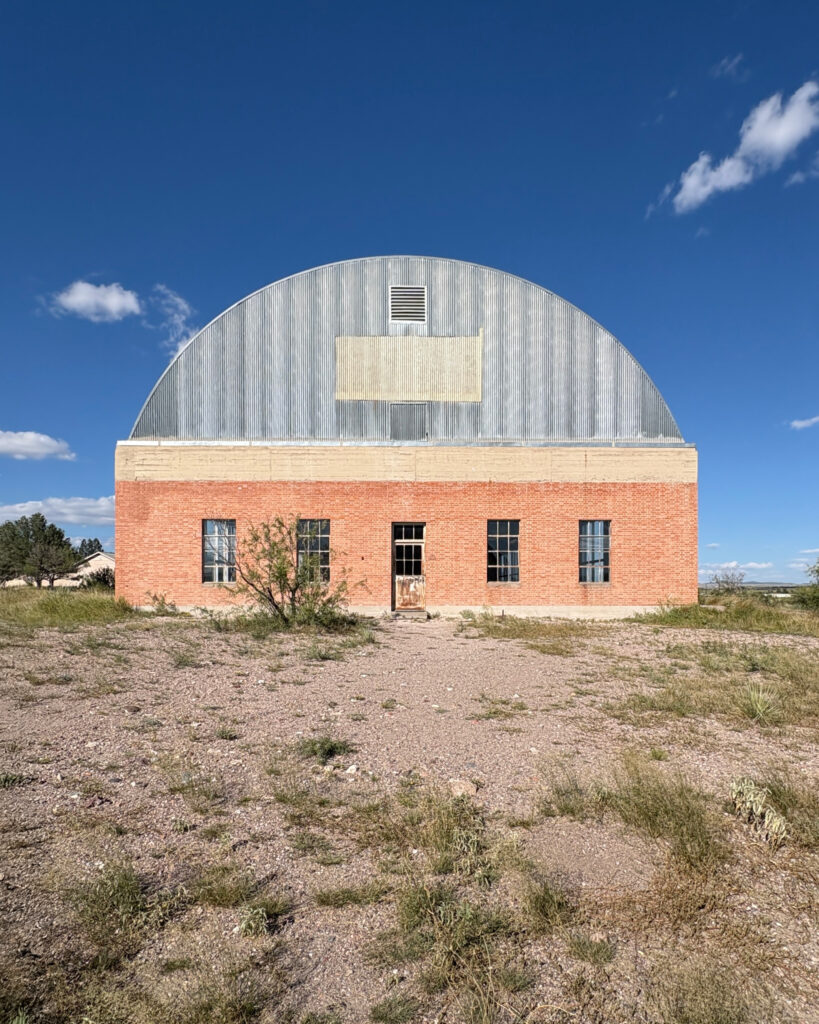
大砲格納庫 外観
A building that once served as artillery storage for a military facility has been installed with 100 aluminium works by Judd. In order to stop leaks, Judd added a vaulted roof to the previously flat-roofed space, thereby doubling the building’s height and altering its proportions.
軍事施設の大砲格納庫であった建物にジャッドによる100点のアルミニウム製の作品がインストールされている。雨漏りを止めるため、フラットルーフだった空間にジャッドはヴォールト屋根を架け、建物高さを二倍にし、プロポーションを調整している。
/
02.Whyte Building(1990) Exterior
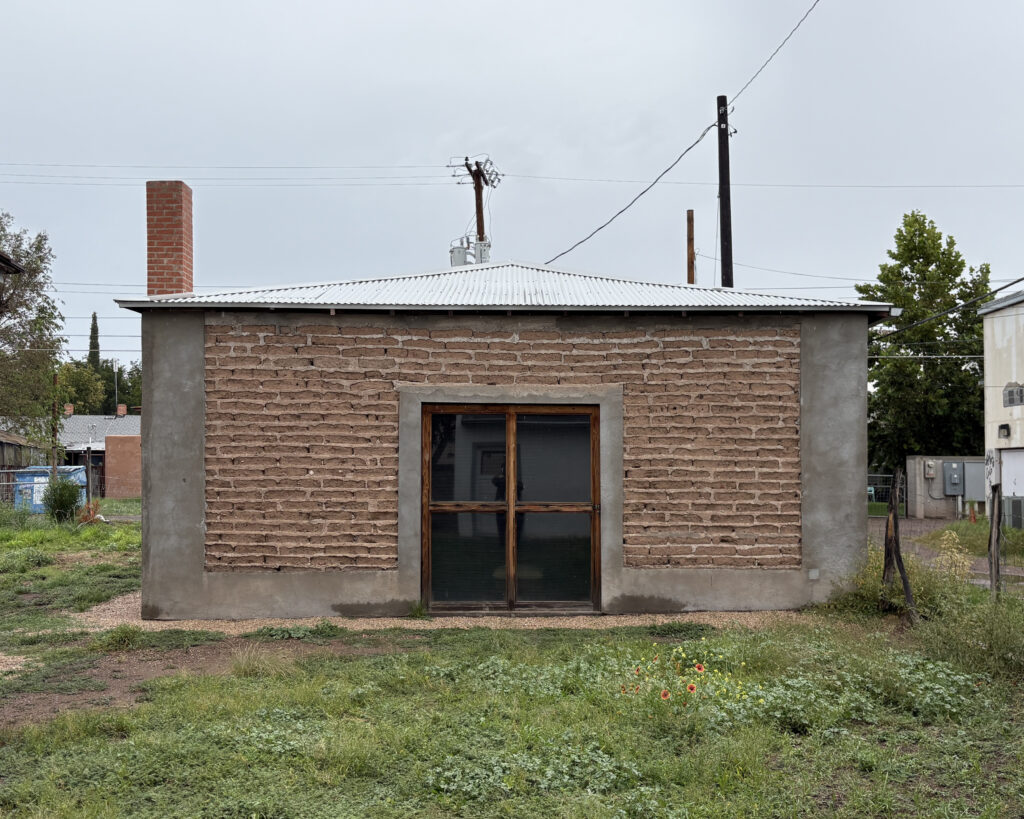
ホワイト・ビルディング 外観
A swivel door has been added to the building, which previously served as a storage barn. This is one of Judd’s methods of introducing architectural changes to existing spaces while keeping intervention to a minimum.
倉庫であった建物に十字扉を加えている。既存の空間に最小限の操作で建築的な変化をもたらすジャッドの手法のひとつ。
/
03.Arena(1980-84) Exterior
アリーナ 外観
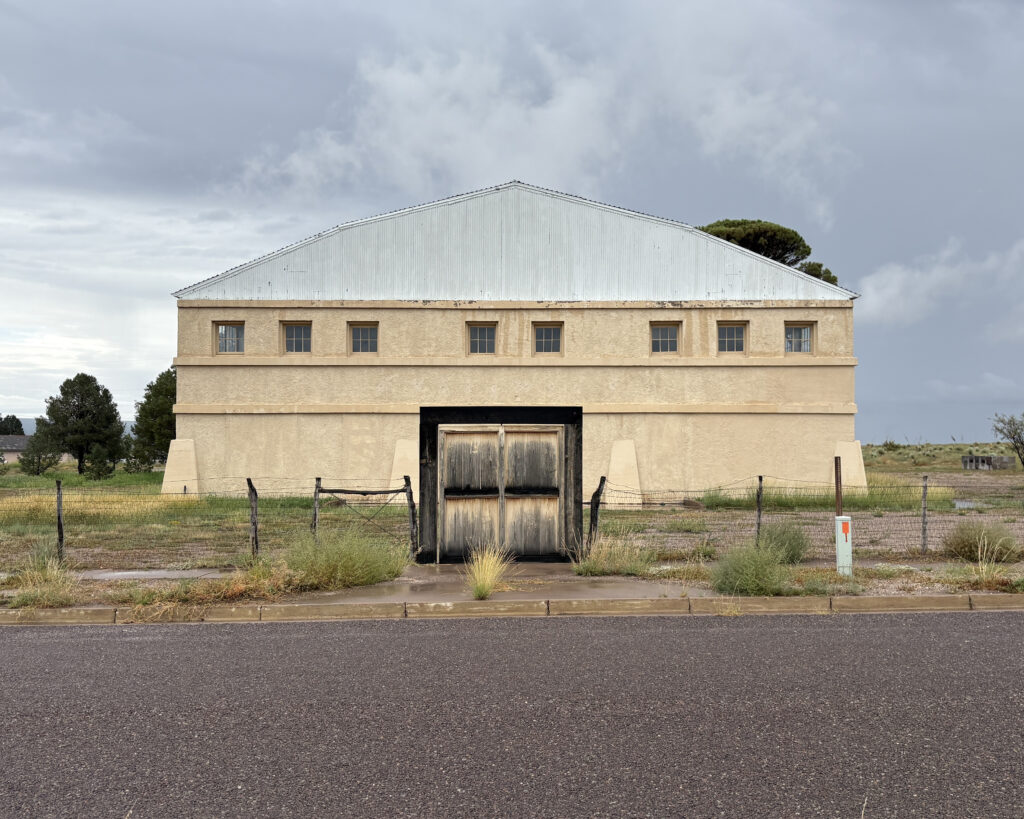
Originally an aircraft hangar, later used as a gym and indoor riding hall. The cross doors, frequently featured in Judd’s architectural interventions, functions as a gate here by being positioned independently outdoors.
元々は飛行機格納庫、のちにジムや屋内乗馬場としても使用されていた空間。ジャッドの建築的介入によく用いられる十字扉はここで独立して屋外に配置されることで、ゲートとなっている。
/
04.Casa Perez(1983-87) Interior
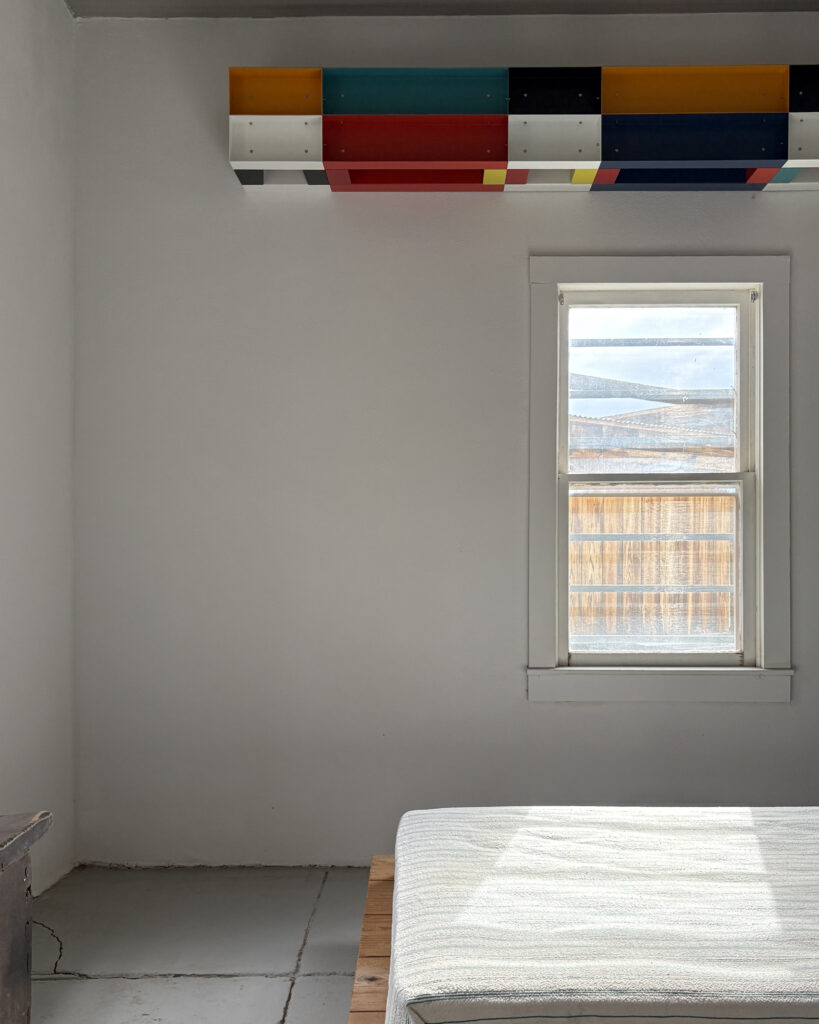
カサ・ペレス 内観
About an hour’s drive from Marfa lies the ranch house, which is located in an area called Ayala de Chinati. The relationship between the exhibition space, the living space and the positioning of the opening is perfect within its most private spaces.
マーファ市内から車で1時間ほど、アヤラ・デ・チナティと呼ばれる地域に建てられていたランチ・ハウス。最もプライベートな空間において、展示空間、生活空間、そして開口部の位置の完璧な関係が達成される。
/
05.Whyte Building(1990) Interior
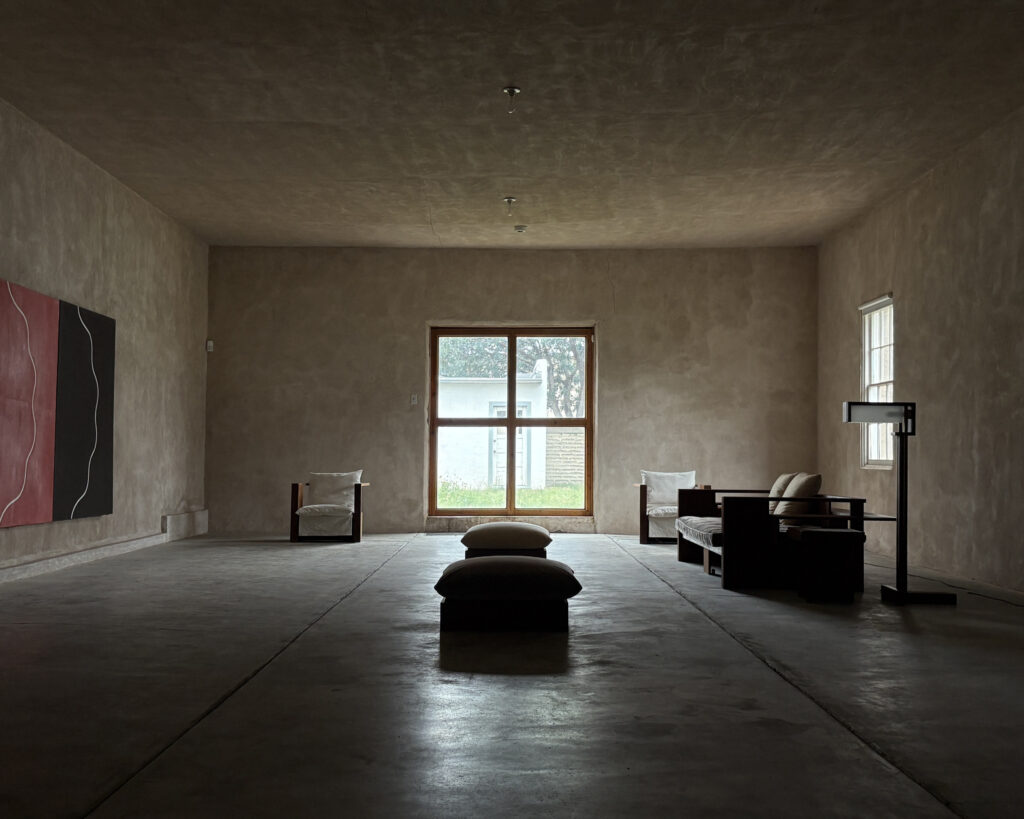
ホワイト・ビルディング 内観
Judd favoured natural light and drew it through the swivel door that he installed. He corresponded the depth and brightness of the space with the light, and determined the layout of the furniture and two-dimensional works in relation to it.
自然光を好んだジャッドは、自身が設けた十字扉から光を取り込み、空間の奥行きと明るさを対応させ、家具と平面作品のレイアウトを光との関係で決定している。
/
06.Arena(1980-84) Interior
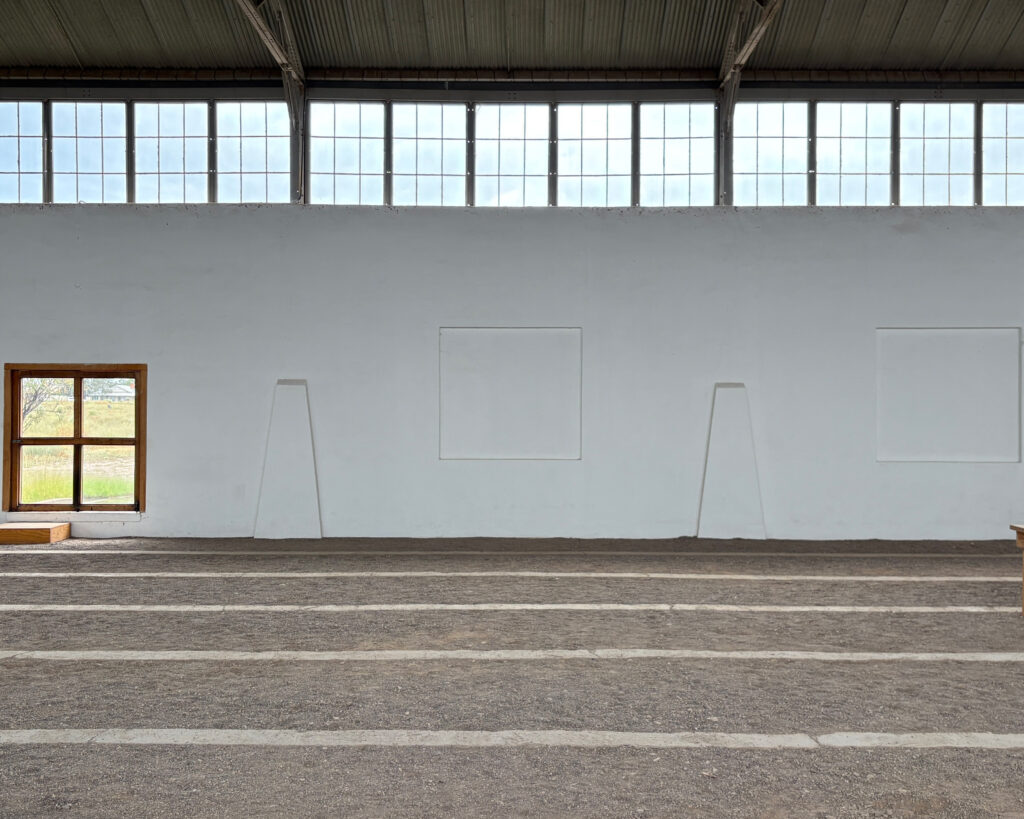
アリーナ 内観
Some existing openings have been left as they are, some have been filled in while retaining a recess, and some have been filled in without leaving a recess. Judd’s thoughtful approach to openings is evident here.
既存の開口部はあるところはそのまま利用され、あるところは窪みを残しながら埋められており、またあるところは窪みを残さず埋められている。ジャッドの開口部に対する思慮深い判断がここでは観察できる。
/
07.La Mansana de Chinati / the Block(1973-1994) West building Interior
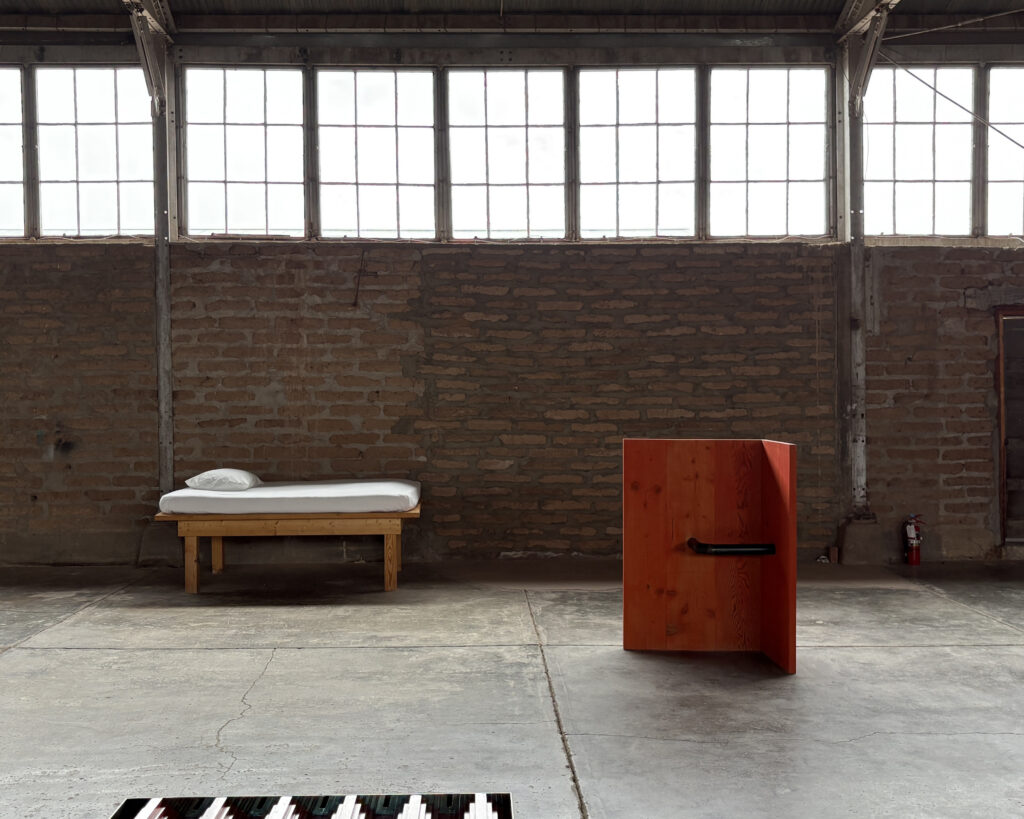
マンサナ・デ・チナティ(ブロック) ウェスト・ビルディング 内観
Originally an aircraft hangar, later used as a warehouse. A unique feature is the placement of a bed alongside Judd’s work. It’s a fusion of exhibition and living spaces.
元々は飛行機格納庫、のちに倉庫としても使用されていた空間。ジャッドの作品とともにベッドが配置されている点がユニークである。展示空間と生活空間の融合。
/
08.La Mansana de Chinati / the Block(1973-1994) West building Interior
マンサナ・デ・チナティ(ブロック) ウェスト・ビルディング 内観
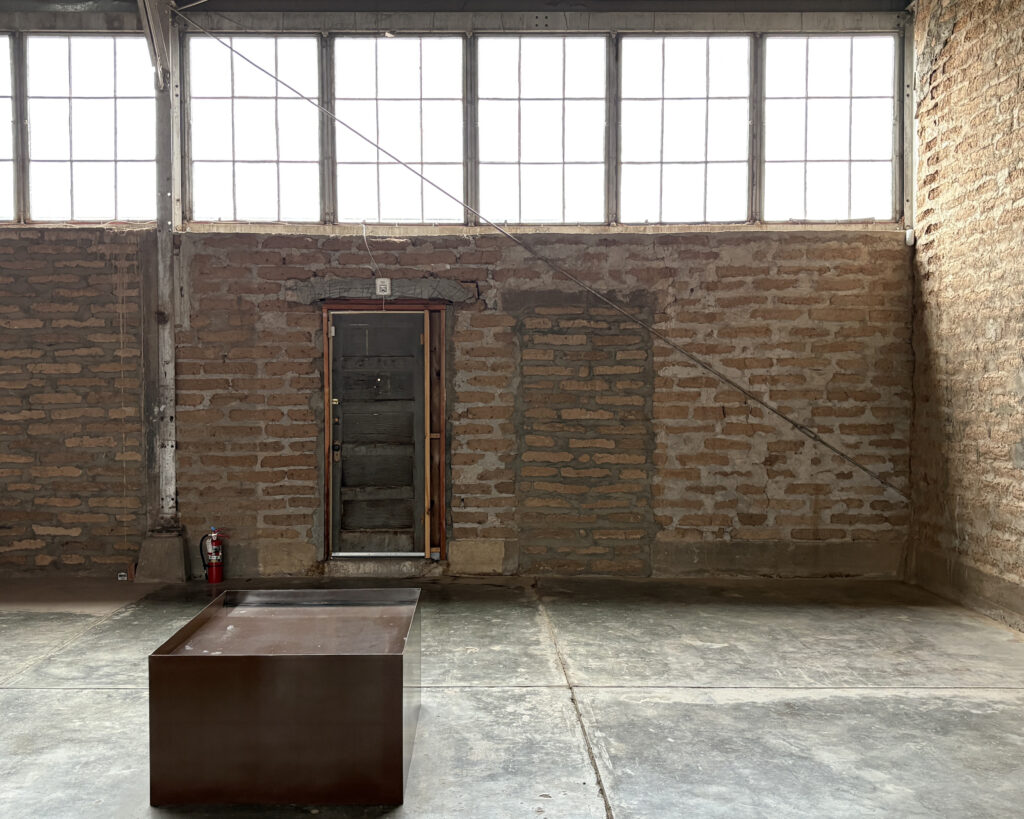
The position of the entrance door has been adjusted to accommodate the permanent installation. This is one example of Judd’s emphasis on sequence in his renovation.
パーマネントインスタレーションに合わせてエントランスのドアの位置が修正されている。シークエンスを重要視するジャッドのリノベーションの特徴のひとつ。
/
09.La Mansana de Chinati / the Block(1973-1994) Winter garden
マンサナ・デ・チナティ(ブロック) ウィンター・ガーデン
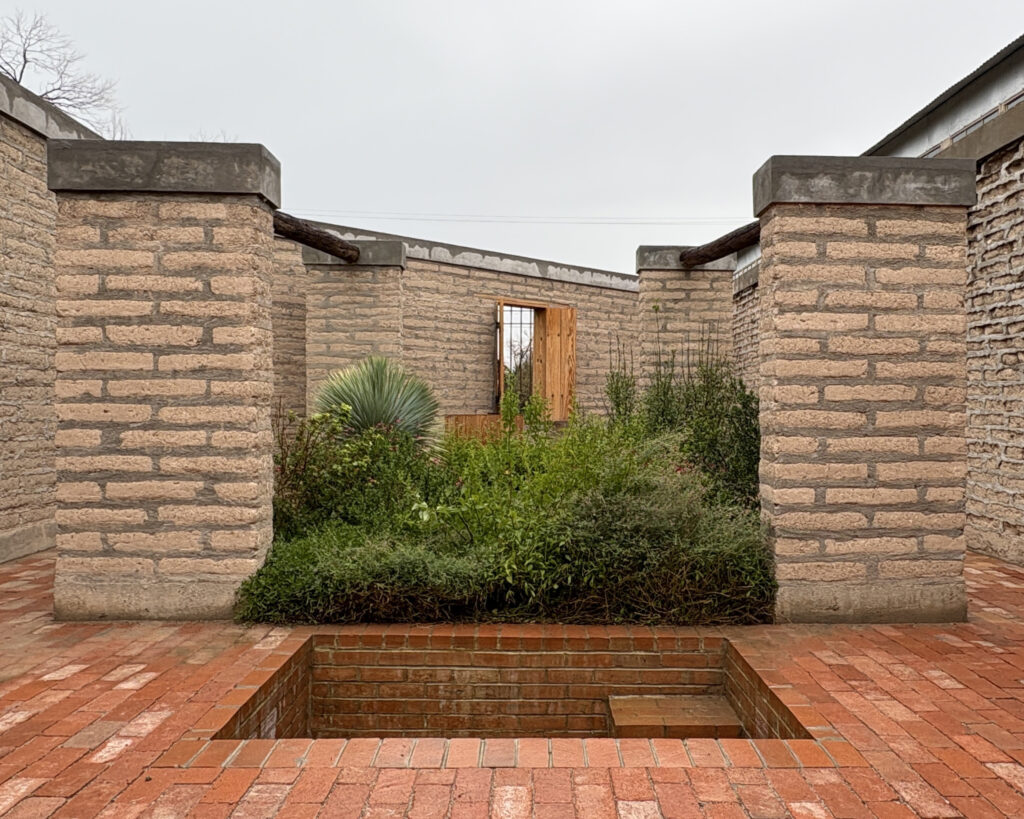
Judd repeatedly attempted to create courtyard-like external spaces by enclosing areas. The Winter Garden is situated in a corner of Manzana de Chinati, with a pool at the front of the garden and benches and windows overlooking the outside of the property at the rear.
ジャッドは空間を取り囲み、中庭型の外部空間を作ることを繰り返し試みている。ウィンター・ガーデンはマンサナ・デ・チナティの片隅に位置し、庭園の手前にはプール、奥にはベンチと敷地の外を眺める窓が設けられている。
/
10.Chamberlain Building(1080-86) Interior
チェンバレン・ビルティング 内観
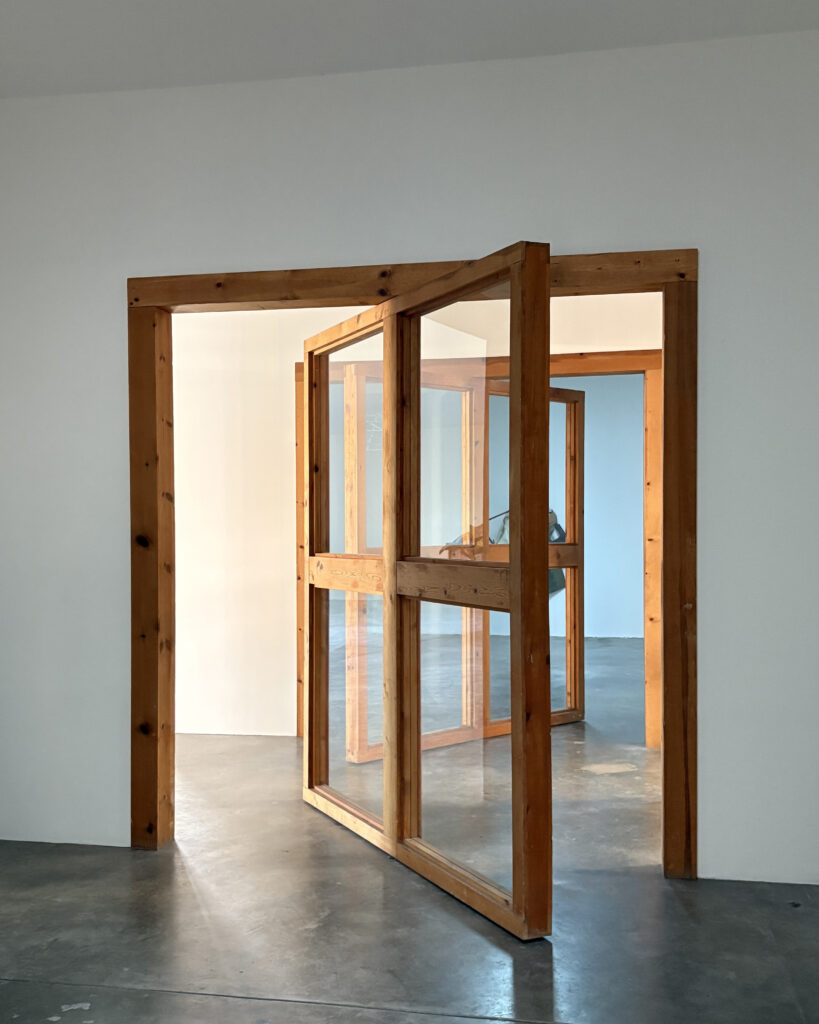
John Chamberlain’s work is installed in an area that used to be a fabric warehouse. Judd was interested in how space is divided. Cross doors are also used to divide and connect spaces.
生地倉庫であった空間にジョン・チェンバレンの作品がインストールされている。ジャッドは空間の分割に興味があった。そして空間同士の分割と連結にも、十字扉は使用されている。